
The long term global environmental impact of plastic packaging waste is well known, and the BioPackMan project aims to develop viable bio-based alternatives. The 20-strong research consortium led by Ethnicon Metsovion Polytechnion of Athens has received €9.5 million in Horizon Europe funding to research and develop new green and sustainable packaging solutions. Plastic is the dominant packaging material used in the food and cosmetics industries and many other sectors, according to Kevin O’Connor, founder of Irish partner Bioplastech. This requires unsustainable manufacturing processes and leads to large quantities of waste.
“We use a huge amount of plastic packaging,” he says. “The problem is that it’s all fossil based and is not biodegradable. And even though some of it is recyclable, the recycling rates are really dire.” The four-year project, which is now approaching the halfway point, aims to address the full packaging lifecycle, from production through recycling and final end of life. Interestingly, the core of the problem is the high-performance characteristics of plastic.
Replicating high performance

Professor Kevin O’Connor, Co-Founder of Bioplastech.
“Plastics are a kind of freaky material, they’re exceptional. They offer flexibility, rigidity, chemical resistance, they provide physical barriers, gas permeability where required and more,” says O’Connor. It’s a huge challenge for bioplastics to replicate all these characteristics.
“We need to replace these high functioning, high performing materials from the fossil industry with bio-based, biodegradable alternatives,” O’Connor continues. “Bio-based addresses the start of life and biodegradable addresses end of life. But do the materials actually perform? There’s no point in having nice environmental aspects if you don’t have performance. This project is focused on performance. Can we make packaging materials with good barrier properties? Can we make packaging materials that are durable for use in things like shampoo bottles as much as they can be used for plastic film for use in food packaging?”
Lifespan is also important, according to O’Connor. While having biodegradable packaging that can go to composting rather than landfill or incineration is attractive, composting does not have to be the first destination for the plastic after its first use.
The recycling imperative
We understand that where biodegradable plastics become contaminated by things such as food then they should be sent to composting, but “a lot of people, including myself, are saying the materials should be recycled before they are composted. Can you get another round of life or maybe two, 10 or even 20 rounds from that material? This project is trying to take a holistic view and look at the start of life, the middle of life, and the end of life. I would argue that the only truly circular economy is going to be where you start with bio-based materials that you can recycle and then can compost if they’re biodegradable. That’s really what the project is trying to achieve.”
He explains that there are two bio-based biodegradable polymers used in the project – polyhydroxyalkanoate or PHA and polylactic acid or PLA. The PLA for the project is produced by Futerro of Belgium, one of the project partners. Bioplastech produces the PHA. He explains that neither of these polymers can achieve the desired performance characteristics on their own. “Additives are required and they need to be blended with the biodegradable plastics to improve performance. That’s what the project is trying to do, to make the packaging bio-based and high performing.”
Optimising the polymer
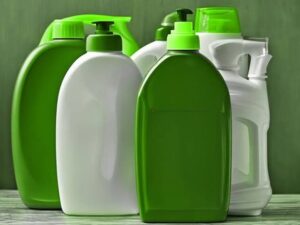
Example of recycled product prototype
Bioplastech’s role is to supply PHA to other project partners and work with them to deliver the required performance. “We produce the polymer by fermentation, and we give that to the materials scientists in the other partners,” he adds. “They process it, blend it, carry out tests, and then come back to us to ask for some tweaks. We go back in, and we tweak the polymer and we give it back to them. There’s a lot of back and forth. Once that is finished, they ask us to scale up from kilograms to much larger quantities. We entered into that phase recently and ran our first scale-up trial in late May 2026.”
The company is also collaborating with project partners on recyclability. “We make the polymer for our partners, they do a few things and then we will take the material back and see if it can be recycled. Other partners are doing that as well.” Food and cosmetics packaging are the main areas of interest for the project. “BioPackMan partners are looking at things like food wraps which can be a kind of a semi-hard plastic, and it can also be a kind of film. They are also looking at things like detergent and cosmetic bottles,” he says.
Targeted effort
“We are seeking solutions for a major problem area” O’Connor explains. “If you look at packaging between the day of production and the day it ends up in landfill, it’s a very short period of time. It’s definitely less than a year, and in some cases, it can be months because our recycling rates are still sub-optimal. We’re getting better, there’s no doubt about it. Schemes like Repak have made a huge difference as has the return scheme for plastic bottles. These are all very good initiatives, but we’re still stubbornly low for plastic recycling rates.”
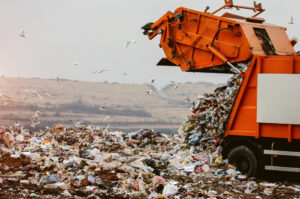
Landfill waste
He says 70% of plastic waste does not go to recycling. “That means it’s being landfilled, exported or burnt, and that’s a very poor outcome. That’s why we’re going after packaging; because that’s where the vast majority of plastic waste arises.”
Direct replacement and recycling of fossil-based plastic is not the long-term solution, however. “The real key to tackling the plastic waste problem is prevention,” he says. “Even if our rate of recycling is going up, it is not keeping pace with the rate of production. That means that over time, we’re producing more waste plastic. That is definitely where you don’t want to be. My argument is that we should be looking at prevention, reduction, and minimisation. You should prevent first and then reuse.
“Where you absolutely need packaging then you have to ask how much packaging do I need to use, can I use less plastic, can I use alternative materials. We need solutions that are sustainable. We don’t want to take away food packaging, for example, where it would increase food waste so we need to be smart and come up with practical solutions that address the problem without causing another one.”
Innovation
Government policies are going to be important in this regard, he notes. “If policy guides us towards bio-based and biodegradable plastics, the industry will provide the solutions. Policy can create markets, but it can also guide us towards reduction and prevention. There would still be a massive business in bioplastics if plastics were halved in production. We have got to innovate and think outside the box, and that’s what this project is about.”
Looking to the future, policy will also play an important role in the financial viability of bioplastics. “We are looking at the economics,” says O’Connor. “The project has people specifically tasked with the techno-economic analysis of the project. When you’re at pilot scale, your costs are always going to be higher. But even when we go to economies of scale, bioplastics will never be as cheap as fossil plastics. The reality is we have to accept that they’re going to be 20% to 30% more expensive. I would argue that you need to look at the subsidies that the fossil industry gets to understand that there isn’t a level playing field.”
Carbon taxes or more realistic carbon pricing would go a long way towards levelling the playing field, he adds. “That would make bio-based biodegradable plastics much more competitive.”
Learn more about the BioPackMan project here. For further information about Horizon Europe go to www.horizoneurope.ie