EU State of the Union
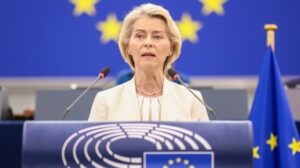
President Von der Leyen delivering State of the Union
Each September, the President of the European Commission delivers the State of the Union address to the European Parliament. For Brussels insiders, the annual State of the Union speech is more than political theatre. It represents one of the clearest signals of how the Commission intends to shape legislation, spending priorities and programme design during the year ahead. For universities, research organisations and innovative companies, it can often provide an early indication of future opportunities and emerging policy themes.
This year’s address from Ursula von der Leyen, delivered on 16 September, came at a particularly important moment. Discussions on the EU’s next long-term budget are intensifying, proposals for Framework Programme 10 remain under development, and Europe continues to grapple with questions of competitiveness, technological leadership and economic security.
Against that backdrop, research and innovation were not the headline subject of the speech, but they featured prominently in the Commission President’s vision for Europe’s future.
Innovation at the heart of Europe’s economic strategy
One of the clearest messages from the speech was that the Commission, now more than ever, sees innovation as central to Europe’s economic prospects. President Von der Leyen spoke repeatedly about the need to boost productivity, strengthen industrial capacity and create the conditions for companies to grow across the Single Market. Drawing on the recommendations of the Draghi and Letta reports, she argued that Europe must move faster if it is to remain competitive in a contested and even hostile global economy.
This matters for the research community because it means that investment in research and innovation will continue to be viewed as an essential part of the EU’s competitiveness agenda. However, the emphasis is shifting towards how research contributes to economic growth, industrial development and the creation of new markets.
Political endorsement of Horizon funding
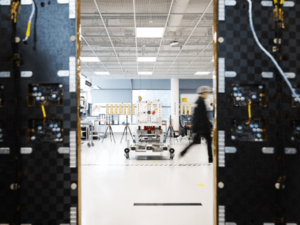
ICEYE, a European founded global aerospace company
Perhaps the most noteworthy reference for the research sector came when Von der Leyen highlighted the success of the European space company ICEYE. In describing the company’s development, she specifically noted that it had received Horizon funding at an early stage before attracting private investment and growing into a globally recognised space technology business.
The reference may have occupied only a few sentences in a speech lasting over an hour, but it was one of the most revealing moments for the research community. At a time when discussions are underway on the shape and scale of future EU programmes, the Commission President chose to present Horizon funding as a practical example of how European public investment can help create successful technology companies. This implies that, from the Commission’s perspective, research programmes are now more expected to support Europe’s wider economic and strategic objectives.
The rise of strategic technologies and European autonomy
Another strong theme running through the speech was Europe’s desire to reduce external dependencies. The President highlighted concerns over critical raw materials, advanced technologies and strategic supply chains, particularly in relation to China. She announced plans for a new European Corporation on Critical Raw Materials and stressed the need to strengthen Europe’s technological capabilities.
For Horizon participants, this will increase the attention on areas such as semiconductors, advanced materials, batteries, clean technologies, space, cybersecurity and quantum technologies. These themes, while already prominent within Horizon Europe, will have a central place in future programmes.
Defence and security research gaining importance
The wider State of the Union package placed considerable emphasis on defence, security and resilience. Initiatives linked to defence readiness, drone technologies, air defence and space security featured prominently in the Commission’s wider narrative for Europe.
This trend has been visible for several years, but the latest speech suggests that it is becoming more deeply embedded within EU policy. As a result, technologies with both civilian and defence applications seem set to receive more focus. Areas such as artificial intelligence, robotics, advanced communications, space systems and cybersecurity are particularly well positioned within this policy landscape.
Climate and energy still key priorities

thermometer approaching 40°C during a heatwave in Brussels. Credit: Belga / Hatim Kagha
Climate change also featured strongly, particularly following a summer marked by extreme weather events across Europe. However, the Commission frames this area rather differently than in the past. Now environmental objectives and climate policy is being explicitly linked to resilience, affordability and energy security.
The President argued for faster investment in electricity networks, energy storage and clean energy deployment. This points towards continued opportunities in energy research, climate adaptation, resilient infrastructure and related technologies. The underlying rationale is not only climate action but also reducing Europe’s reliance on imported fossil fuels and strengthening long-term economic resilience.
What this might mean for FP10
Viewed through an FP10 lens, several messages stand out to those trying to anticipate the direction of EU Science, Technology, and Innovation (STI) funding. The traditional commitment to scientific excellence remains, but the political language around research is changing. References to competitiveness, growth, industrial capacity, strategic autonomy and security were centre stage rather than discussions of research excellence or innovation.
For companies, researchers, and RPOs it seems that future EU investment will favour projects that can demonstrate not only excellent science but also a contribution to Europe’s broader economic and strategic goals. Research linked to digital technologies, advanced manufacturing, energy systems, defence-related capabilities, critical materials and industrial competitiveness are strongly aligned with the political direction outlined in this year’s address.
Conclusion
Although research and innovation were not the centrepiece of the 2026 State of the Union address, innovation was woven throughout the Commission’s vision for Europe’s future. Perhaps the most striking feature of this year’s address was how rarely research was discussed as an end in itself. Instead, it appeared primarily as a tool for delivering competitiveness, resilience and security objectives.
However, the unresolved question is whether this growing emphasis on competitiveness and security can be balanced with the traditional strengths of the Framework Programmes. Universities, research organisations, and stakeholders will be watching closely to see whether excellent science remains protected as funding priorities develop.
For Ireland’s research and innovation community it is clear that research remains firmly on the European agenda. However, the case for funding should not just be about scientific endeavour and argued more in terms of its contribution to Europe’s prosperity, resilience and ability to compete in a rapidly changing world.
For further information contact kevin.flynn@enterprise-ireland.com and to find out more about Horizon Europe go to www.horizoneurope.ie