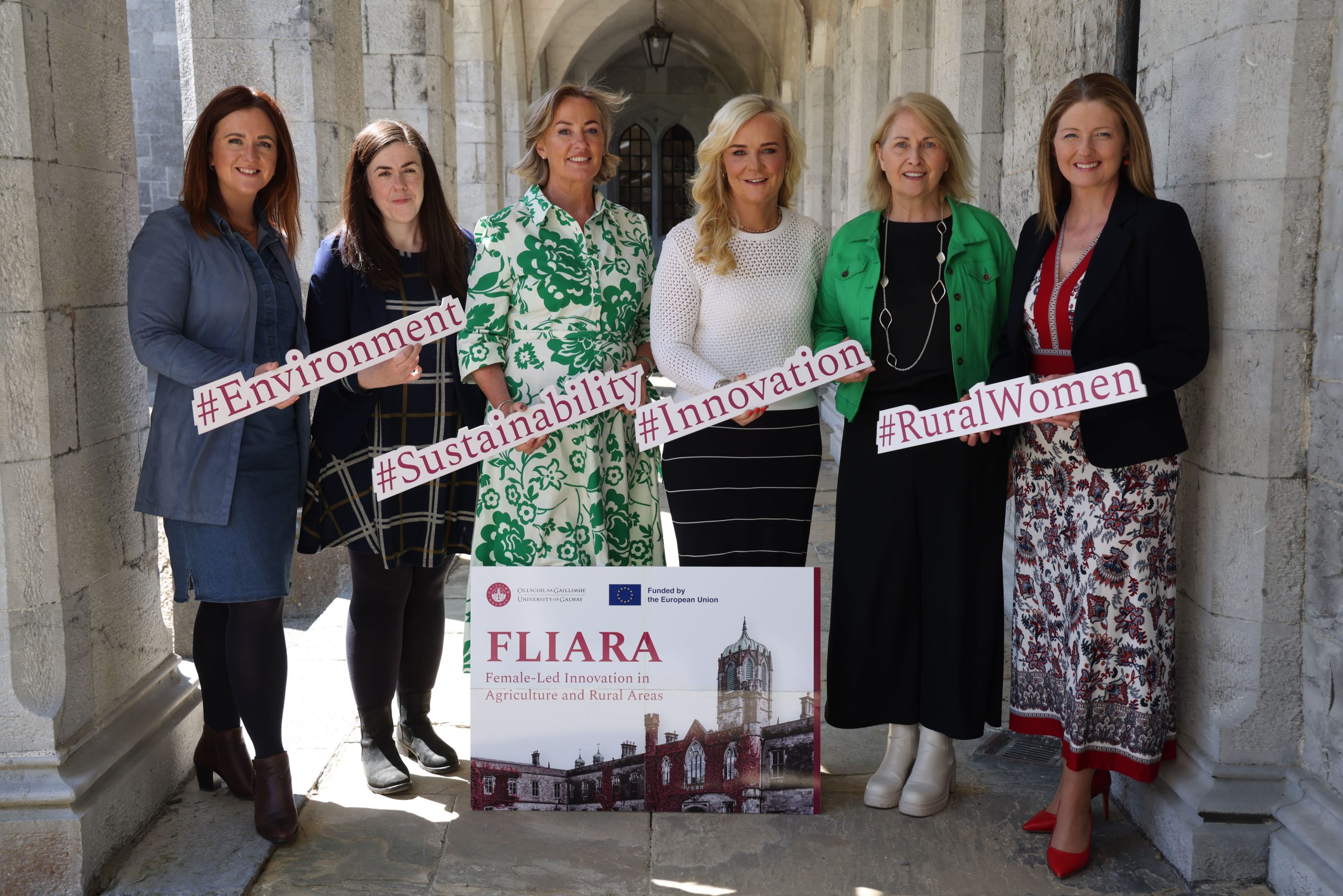
The Horizon Europe-funded FLIARA (Female-Led Innovation in Agriculture and Rural Areas) project has shone a spotlight on the often hidden and undervalued contribution made by women innovators to agriculture and rural communities across Ireland and Europe. Led by University of Galway Associate Professor Maura Farrell, the project has produced 20 case studies, amounting to 200 interviews on value-adding innovative practices by women in 10 EU Member States.
The project also explored the challenges faced by women innovators in this sphere and produced policy recommendations both for the individual Member States concerned and the European Commission on how best to address those challenges and tap into this vast underutilised resource.
Spotlighting unnoticed and undervalued work
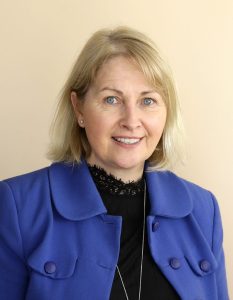
Dr Maura Farrell, Associate Professor, School of Geography, Archaeology and Irish Studies, University of Galway
Professor Farrell’s interest in the topic dates back well over a decade. “My work related to agricultural change and rural development, and I’ve always had a keen interest in women’s role within that and in particular their role in innovative practises,” she says. “I saw that a lot of their work had gone unnoticed and undervalued, particularly on farms. Women carry out a huge amount of work and really don’t get the recognition they deserve. Women can play a significant role in rural development and farm sustainability if supported with relevant and meaningful policy design and development.”
She had gained experience of working with European partners on the Horizon 2020-funded RURALIZATION project and when Horizon Europe published one of the first calls for rural gender research in 2022, that provided her with a clear opening to build on earlier work and engage in research with an EU-wide relevance.
“We were absolutely delighted when the call was issued,” she says. “I had a team of three postdoctoral researchers still working with me on the RURALIZATION project and other national projects. We wanted to explore the innovations that women were involved in as well as future potential innovations that those women could engage in. I was also very interested in the idea of both on and off farm innovation. Even though there’s a lot of similarities between the women and their challenges and opportunities, there’s also a lot of differences. I wanted an opportunity to explore that.”
She turned to Enterprise Ireland for assistance with the Horizon Europe application process. “We applied to Enterprise Ireland for assistance, and we received a Horizon Europe Coordinator Support Grant of about €12,000,” says Dr Farrell. “That was great because we were able to employ Erinn Innovation, a consultancy company, to help us to structure the proposal. Erinn Innovation kept us on track during the process.”
 Dr Farrell assembled a 15 strong consortium from 10 Member States to participate in the project, including University of Galway, Teagasc and Longford Women’s Link in Ireland. “We picked some partners that we had already worked with in Europe,” she says. “But we were also interested in the multi-actor approach and having partners that were not from an academic background as well.”
Funding was approved in 2022 with the project kicking off in January 2023 and scheduled for completion at the end of 2025. “We received just shy of €3 million in funding with nearly €750,000 coming to Ireland and €600,000 of that coming to the University of Galway.”
Focusing on the future
The project looked to the future and the viability and sustainability challenges facing farms and rural areas over the next 15 to 20 years, she explains. “We examined the innovations needed to ensure viability and sustainability, then explored how women could contribute to these areas. Our findings show that governments and the European Commission could greatly benefit from the involvement of women innovators”.
Storytelling formed a major component of the project. “We compiled 200 interviews from across Europe, and they showed us the challenges that women are facing in agriculture and in rural areas,” says Dr Farrell. “Those challenges range from women generally being the chief carers within the family unit to difficulties in accessing finance.”
Highlighting women innovators
They also looked at the valuable impact being delivered by those women innovators. “My idea from the word go was look at how women in rural areas and on farms are really adding huge value. That’s what I wanted to spotlight and highlight. I’m a firm believer in highlighting the positives as well as exposing the weaknesses that are there and what’s needed to be changed through policy and looking at what these women are bringing to the table. When you’re trying to influence policy it’s always a good idea to show the value of something rather than how much you need to assist the people involved. These women can play a big role in rural communities and agriculture.”

One of the lessons learned was in relation to the nature of female entrepreneurship. “We have seen women who have overcome challenges and set up quite successful businesses at a scale that they wanted. That is really important. This is about options and choice. In our project, we found that it was a matter of choice whether to scale up or to stay at the scale they were at. There’s lots of recognition for women out there who scale up, but the FLIARA project has found that choice is hugely important to women. They might have a successful business that they are able to run themselves and they don’t want to employ people or make it any bigger. Of course, we had women who wanted to expand the business hugely and again, it was about choice. A lot of our learning from the cases studies is that it is hugely important to give these women the choice.”
Recognition matters
That means giving credit where it’s due as well. “We need to recognise success no matter if their innovation is at a small scale, a medium or a very, very large scale. I think we’re not very good at doing that within an Irish or a European perspective of recognising success at different scales. I think every time we see somebody who has been successful, we automatically assume that they could do better.”
To bring those messages to a wider audience, 20 of the women featured in the case studies were chosen to be FLIARA Ambassadors for female innovation in the agriculture and rural development space. “These Ambassadors are hugely important because they are examples of how successful women can become in this area,” says Dr Farrell.
Work is continuing on policy and policy direction. Booklets and briefs are being prepared for each of the 10 countries to influence government policy on this area including on how challenges can be addressed and how female innovation and entrepreneurship on farms and in rural areas can be better supported.
Tangible policy impacts
“We will have a collective policy brief from the overall FLIARA project that will go forward to the European Commission,” Dr Farrell adds. “I’ve already presented the project twice in the EU Parliament and several times to the European Commission. On one occasion, we were asked to present by the Directorate-General for Agriculture and Rural Development (DG AGRI) and they put out a call to the other DGs in Europe and we had 47 representatives from different DGs attended. That was an amazing result for us. I’ve also presented at the Oireachtas in Ireland. The project has achieved amazing reach and hopefully we will see results in terms of policy change.”
Indeed, those results are already in evidence. “The European Commission has come out with some initial ideas around the next Common Agricultural Policy (CAP), and it’s wonderful to see women in agriculture already being identified as part of that. I have no doubt that the work of FLIARA and the partners in the project with the support of Horizon Europe funding has impacted the direction of policy and I think that women will be a strong element of the new CAP. I believe that we played a big role in that here in Ireland in leading out the project and Enterprise Ireland have played a significant role as well in funding us initially.”
If you are interested in finding out more about the Horizon Europe programme, contact horizonsupport@enterprise-ireland.com or go to www.horizoneurope.ie
Ends