The rapidly growing global population is creating increased demand for sustainably produced nutritious food at the same time as the negative impacts of climate change are presenting severe challenges for agriculture. The EU funded COST Action (European Cooperation in Science and Technology) DIVERSICROP project led by UCD Associate Professor Dr Sónia Negrão is looking deep into the past to find potential solutions to this issue.
Dr Negrão has brought together a consortium of almost 500 researchers, professionals and stakeholders with expertise in archaeobotanical, crop science and genetic diversity, and human nutrition as well as policy actors spanning more than 50 countries across the world to share information and knowledge to identify climate-resilient crop lines and their potential nutritional and health benefits.
High nutritional potential
“In Europe, many nutrient-dense foods are not widely grown and consumed, despite their suitability to European climates and environments, and viability for sustainable production with lower inputs,” she explains. “Underutilised crops that are stress resilient such as rye and legumes, have the potential to supply key nutrients and improve diets and reduce the risk of diet-related diseases. Such crops have a long history of cultivation across the continent and are part of the national historic food identity of different European countries yet are underutilised due to several complex reasons.”
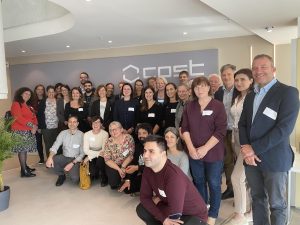
First Management Committee meeting at COST headquarters, Brussels
The DIVERSICROP project follows closely on the Research Ireland-funded CROPREVIVE research project led by Dr Negrão and archaeologist Associate Professor Meriel McClatchie. That project investigated how ancient farming practices can help in the development of more sustainable farming systems in modern Ireland.
That led Negrão and McClatchie to apply for COST funding for a much more ambitious project. “We got funding from the UCD Earth Institute that allowed us to hire a person who helped us put the project and the application together,” says Negrão. “We are very grateful to the UCD Earth Institute for that.
We also received a small grant from Enterprise Ireland, and we used that money to pay a consultant who helped us to improve the proposal.”
The application was successful, and the project received approximately €1 million in funding with work kicking off in early 2023.
The starting point for DIVERSICROP is the first crops that were domesticated by humans in the Fertile Crescent 10,000 years ago. These include wheat, barley and rye. “Everyone knows wheat and barley, and everyone cultivates them,” says Negrão. “But rye is like a poor relation that no one cares about. It’s very tolerant to stress but very understudied.”
She notes that the crop was once very widely cultivated across Europe but is now mainly confined to central and eastern European regions and the Nordics. Indeed, in Finnish the same word is used for rye and bread.
“That doesn’t mean there are no agronomic conditions to cultivate rye in other countries,” she adds. “It just means that farmers are not cultivating it, because there is no demand in the market or for other social and cultural reasons.”
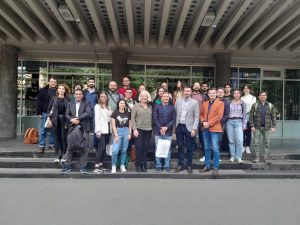
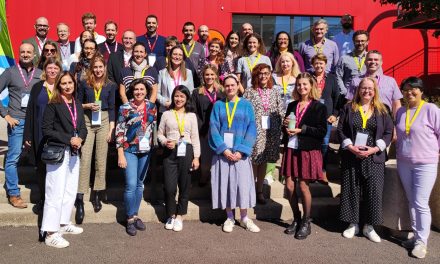
DIVERSICROP project consortium outside training school hosted by University of Serbia
Protein rich food sources
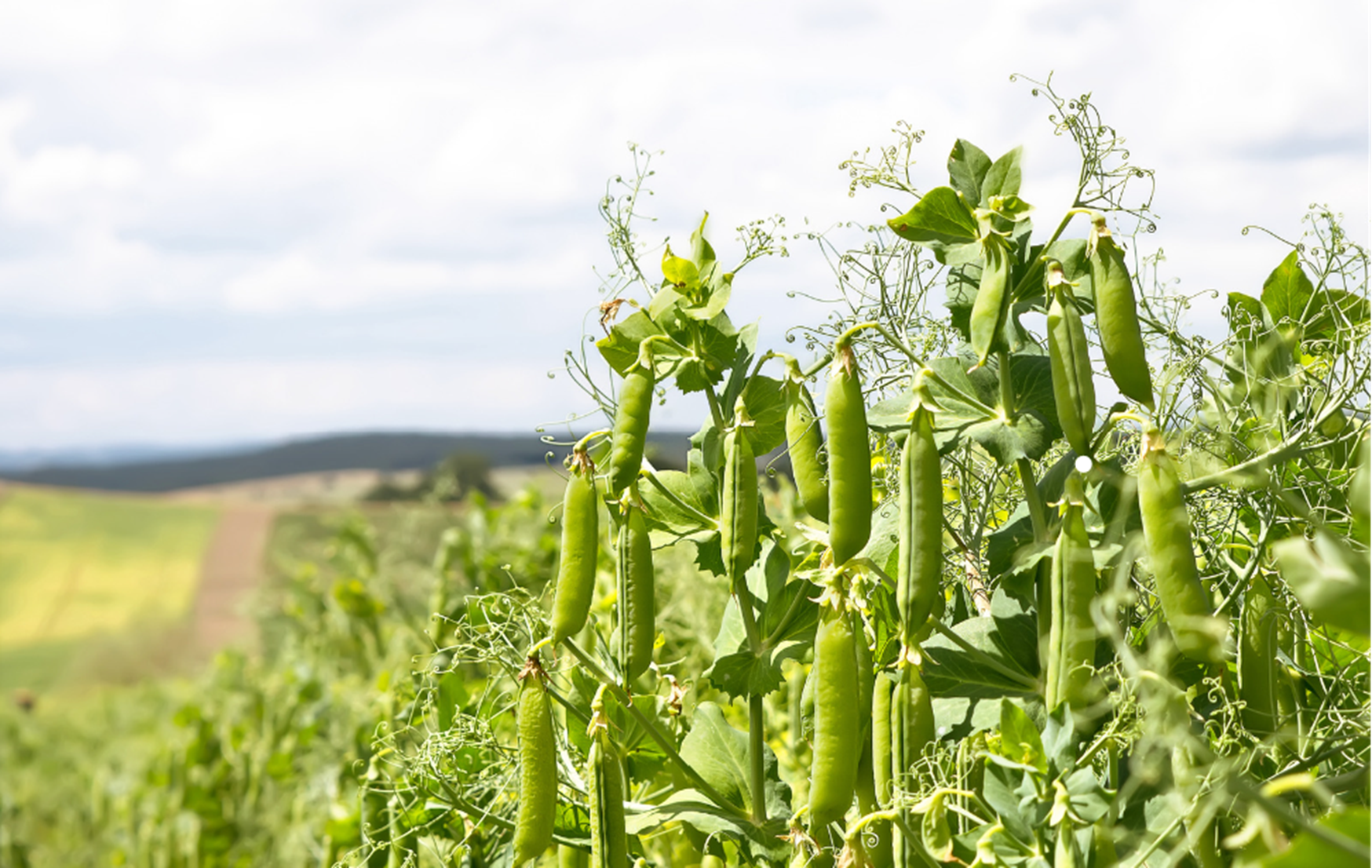
Along with rye, the project looks at legumes, specifically peas and chickpeas. “These crops are very important because they bring a lot of protein,” she points out. “And with the new trend for plant-based food, legumes have suddenly become way more relevant than they were.”
The project is in some respects a detective story. The consortium members are sharing data and information about where and when the three crops have been grown and this is placed in a historical context to seek explanations for changes over time.
The project will use data from archaeological excavations and other sources to establish where the crops have been grown. “We can see how much was grown in those places, the type of locations where it was grown, and the dates when it was grown. Then you can start seeing maps of how things progressed throughout time, through the centuries. It’s very interesting because, for example, in Ireland, peas are still cultivated in the same locations as they were 5,000 years ago.”
On the other hand, rye was a very important crop throughout Europe and now it’s not. “We wanted to learn the lessons of why it is important in some locations, and it’s not important in others, what happened in the past and what’s happening in the present. What are the constraints?”
The data to support sustainable agriculture
A key aspect of the project will be the creation of a very thorough repository of data on the genetic diversity of the three crops within Europe. This is being gathered from disparate national and international sources and repositories across Europe.
That will be very important for future research and will have the potential to help farmers address current challenges. For example, Negrão points out that peas in Ireland are vulnerable to weather conditions, and a wet August can easily destroy a crop because of lodging. Other pea cultivars in Europe that are more resistant to wet conditions and have a stronger stem could be used to deal with that problem. Similarly, other cultivars might be more drought tolerant and suited to other regions in Europe.
 The four-year project is now nearing the end of its second year. “We are now starting to see the data coming in,” says Negrão. “We have five working groups, one on ancient history, another on crop sciences, another on nutrition, one on policy, and the other on science communication.”
Those working groups will not engage in field research but will collect and harmonise data and explore how it can be used to help meet current and future food and agriculture challenges. For example, one output will be the production of a cookery book with contemporary and much older recipes for rye breads. Meanwhile, the nutrition working group has already published a literature review of the health benefits of rye and peas.
Indeed, the COST funding is specifically not for research purposes. “The main goal is to build up networks,” Negrão explains. “The money is used for networking events, training schools, internships, meetings, and so on. We have had training schools for researchers. Our first training school was on data analysis and teaching people how to work with different free software for data management and analysis. Our second training school was on teaching scientists on how to think about policy, and how to bridge the gap between science and policy.”
Supporting future research projects
The outputs from the project have the potential to help to improve agricultural resilience in the face of climate change; improve biodiversity; improve the health of citizens; support sustainable food production; and assist in the response to increased consumer interest in plant-based food. It will also likely have other impacts in terms of future research. “The project will not solve world hunger, but I am very optimistic,” she says. “It will generate lots of knowledge that can be used by researchers to address the problem. I think that this is a stepping stone that can drive other research projects in future. We could see future Horizon Europe-funded projects coming out of DIVERSICROP on archaeology and nutrition and other working groups. Analysis by the COST secretariat indicates that Horizon Europe applications emerging from COST Actions have a higher than average success rate.”
 To learn more about COST actions go to the website COST. If you are considering an application to COST or would like to join a current Action or would like information on any aspect of the programme, please contact David Flood, Ireland’s COST National Coordinator (CNC), at David.flood@enterprise-ireland.com.
If you are interested in finding out more about the Horizon Europe programme contact horizonsupport@enterprise-ireland.com for further information or go to www.horizoneurope.ie
Ends