The Horizon Europe-funded GRASS CEILING (Gender Equality in Rural and Agricultural Innovation Systems) project has highlighted the significant but often invisible role played by women in the success of European farm enterprises and their potential to make an even greater contribution both to farms and rural economies if the right support frameworks are in place.
Professor Sally Shortall, GRASS CEILING coordinator
Led by South East Technological University (SETU) / Newcastle University (UK)-based Professor Sally Shortall, GRASS CEILING is a three-year €2.8 million multi-actor project that aims to empower rural women and increase the number of socio-ecological innovations led by women in agriculture, the rural economy and rural communities.
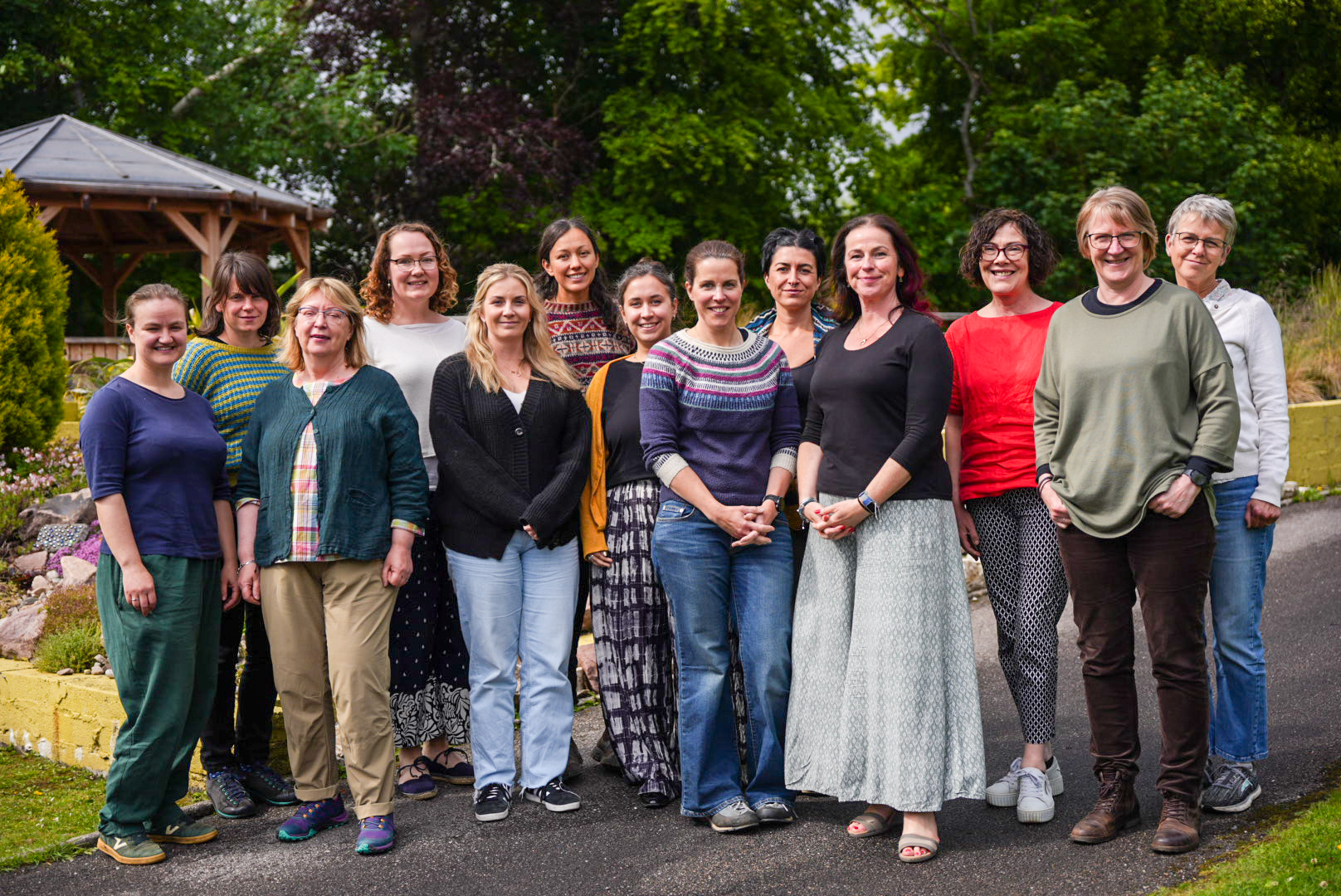
Along with Irish partners SETU, Macra na Feirme and Kilpatrick Innovation, the project consortium includes 26 members across eight other EU Member States.
The project has its origins in work carried out by Professor Shortall for the Scottish government and the European Court of Auditors on the role of women in agriculture.
Uncovering policy limitations
“Agriculture is the most gender unequal of occupations,” she notes. “The European Court of Auditors was looking at how effectively the European Commission had gender mainstreamed its policies. They asked me to specifically focus on the Directorate-General for Agriculture and Rural Development (DG Agriculture). They got a real hammering from the Court of Auditors about how ineffectively it had addressed gender in its policies.”
That was followed by the Horizon Europe call for projects to look at boosting women-led innovation in farming and rural areas.
Among the first steps in preparing the project proposal was assembling the consortium. “I wanted a good geographical spread with different types of rural economies and agricultural practices as well as different types of gender regimes. Sweden is represented in the consortium, for example. They are the most advanced in Europe in terms of gender equality. We also have Lithuania and Croatia where gender equality would not be quite as advanced. Gender equality is more advanced in Ireland but in some subtle ways it’s not quite so advanced. Scotland is very, very remote and that raises a lot of different kind of gender and rural and agriculture-type issues.”
Proposal preparation grants
Support from Enterprise Ireland proved invaluable at this stage. “I received €5,000 from Enterprise Ireland and this allowed me to hire a consultant to assist with the preparation of the proposal,” says Shortall. “I am not sure I would have been successful without this support. The consultant then became the project manager, and that was really useful.”
Living labs
The centrepiece of the project was the establishment of living labs in the nine participating countries. Each living lab comprised eight women innovators who met three times a year over the life of the project. “The living labs have been highly successful in helping women develop their innovations,” says Shortall.
“It was very important that the women were paid to attend the living labs,” she adds. “That meant we were valuing their time. Every lab was co-led by consortium members who provided training materials for the women. The most important element was the peer-to-peer learning. The women learned a lot from each other and gave legitimacy to each other’s initiatives.”
That latter point is particularly important. “Because they tend to be smaller businesses, micro businesses, and in some cases, women just trying to provide employment for themselves, they can find it very hard to get funding.”
In many cases they have no desire to establish significant enterprises, she points out. “That’s not what they’re aiming for, and you have to start with what people’s objectives are.”
She gives the example of the Irish living lab which covered a broad spectrum of business types. “We have two that are exporting to
Living Labs in Ireland
international markets, and we have others that are just aspiring to supply their regional market in Ireland but are doing incredibly well and are really important enterprises for the region. The living labs were really important for that because the women can see what the others are doing, and they’re really supportive of each other.”
That support often has a profound impact. “In Scotland, we had women who were very shy and quiet at the start. At the first lab there were two women who didn’t speak at all, and they now have very successful enterprises up and running.”
The other key aspect of the project was benchmarking national and European documents and policies to see how successfully they have taken account of gender equality. “In Ireland, we benchmarked the Our Rural Future: Rural Development Policy 2021-2025. We have also looked at climate change documents and how effectively they address gender. We did this across the nine member states and at the European level.”
A European Policy Forum was established to provide a platform for the project team to feed back information to senior policy makers at national and European levels. “The forum has met four times, and we’ve had a lot of buy in from European policy makers,” says Shortall. “DG Agri has been very active in the forum and has attended all of our consortium meetings. We bring women from each of the living labs to consortium meetings and that has been really powerful. At the national level, we’ve had the relevant government departments participating. We are feeding the findings back to the relevant policymakers and I’m pretty sure the project will have a long-term legacy.”
New thinking required
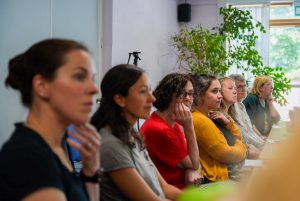 Shortall believes the project has demonstrated that the way enterprise is defined should be reassessed and that current support models don’t cater for many female-led and rural enterprises.
“Most people who set up their own enterprise have been in paid employment, and it takes a while to get going,” she explains. “It would be really good to have something like an entrepreneurial basic allowance possibly for 10 months, so they have some income while they’re trying to set up the business. Some of the women in the living labs talked about how they set up their enterprise when they were on maternity leave because they still had that income coming in, for example.”
Childcare is another issue. “Entrepreneurs are not working 9 to 5, and they may not need childcare all the time, but they might need it when it’s a really busy time for their business one week or from 7:00 AM until 9:00 PM on a particular day. One woman in the Irish living lab talked about how she has brought private childcare into her house because that’s the only way they could have the flexibility they needed around her business. Only very successful entrepreneurs are going to be able to afford that.
“Women are already making a very significant contribution to rural economies and they’re doing it with one hand tied behind their back,” she continues. “Imagine what they could do if they were getting the proper support.”
Gender must be at the centre of policies rather than seen as an add on, she adds. “It’s not enough to have a special initiative for women in a little box over in the corner and continue with mainstream policies without considering gender. The most impactful way to change the shape of any industry is to bring more women in at the outset.”
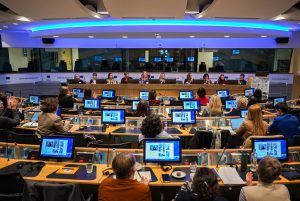
Women entrepreneurs at the final GRASS CEILING event in Brussels
Raising awareness of differing needs and policy shortcomings
The GRASS CEILING project has demonstrated that women are highly innovative and achieve many goals despite challenges like lack of access to finance. “With appropriate support they could achieve even more,” says Shortall.
The project has also demonstrated the effectiveness of the living lab model. “We have worked with over 60 women innovators across Europe for three years, and during that time they developed their rural and agricultural innovations. Two of the living labs, in Scotland and Italy, have secured funding to continue. We have raised awareness of the differing needs of women innovators in terms of advice and finance. We have also given feedback to policymakers on the limited commitment to gender equality in rural and agricultural policies.”
If you are interested in finding out more about the Horizon Europe programme, contact horizonsupport@enterprise-ireland.com for further information or go to www.horizoneurope.ie
Ends