 A €96 million Digital Europe cybersecurity call closes on 14 January 2027, with a further €71.8 million expected through Horizon Europe from March 2027. Together, they offer Irish and French companies, research organisations and public authorities’ opportunities to collaborate on AI-powered cybersecurity, post-quantum cryptography and critical infrastructure. Funding rates differ across topics, making co-financing an important consideration.
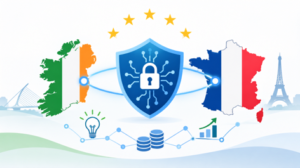
Ireland’s National Cyber Security Strategy 2030, published on 7 October, prioritises threat detection, critical infrastructure, AI, post-quantum cryptography and industry development. These areas also feature in France’s National Cybersecurity Strategy 2026–2030, opening possibilities for bilateral cooperation.
Two programmes implemented in cybersecurity by the European Cybersecurity Competence Centre (ECCC) can support this cooperation. Digital Europe finances deployment and adoption, while Horizon Europe supports collaborative research and innovation. Their combined funding reaches €167.8 million.
Please note that all seven Digital Europe topics presented below require co-financing, with EU grants generally covering 50% of eligible costs. Two exceptions apply: funding can reach 75% for SMEs under the AI-powered cybersecurity solutions topic (50% for other beneficiaries), while Regional Cable Hubs benefits from a 70% EU contribution. Applicants should therefore assess their co-financing capacity before preparing a proposal. The remaining share can be covered from beneficiaries’ own resources, or other permitted sources, as there are currently no national co-funding arrangements in place for these Digital Europe calls; participation does not require a separate national grant, companies can self-finance their participation. All seven topics are also subject to Article 12(5) EU security restrictions, and applicants should check eligibility requirements carefully.
Digital Europe: €96 million until 14 January 2027
 Strengthening European Cybersecurity Technologies, Capacities and Preparedness (DIGITAL-ECCC-2027-DEPLOY-CYBER-11) opened on 1 September 2026. Its seven topics close on 14 January 2027 at 17:00 Brussels time.
AI represents €35 million across two topics. AI-based cybersecurity tools (€15 million) covers generative AI, threat detection, vulnerability assessment, recovery and secure information sharing, notably for authorities, CSIRTs and NIS2 entities. AI-powered cybersecurity for SMEs (€20 million) supports accessible risk management, detection, incident response and reporting solutions.
Ireland has a substantial cybersecurity ecosystem
Cyber Ireland counted nearly 500 companies and over 7,300 professionals in 2022. These topics could connect Irish firms and research organisations with French technology providers and industrial users, subject to eligibility rules. The AI tools topic also examines the security and trustworthiness of AI systems themselves. For Irish and French participants, suitable consortia could combine technology developers, national cybersecurity authorities, end users and research teams to take solutions from demonstration into operational deployment.
Coordinated preparedness testing (€15 million) covers testing, exercises and training in highly critical sectors under the Cyber Solidarity Act. Regional Cable Hubs (€5 million) supports regional coordination, detection and information sharing to secure submarine cables. Given Ireland’s dependence on subsea connectivity and France’s Atlantic cable infrastructure, both countries could work together with operators, maritime experts and competent authorities. Improving situational awareness, incident reporting and coordinated responses across borders would be especially relevant for resilience. Because the cable hubs topic has an institutional focus, national authorities should be engaged from the beginning, alongside technical partners able to contribute monitoring and cybersecurity capabilities.
Three other topics strengthen the European cybersecurity ecosystem. National Coordination Centres (€11 million) supports NCC networks and their links with SMEs and start-ups, with potential contributions from Cyber Ireland, Campus Cyber and clusters. EU legislative requirements (€20 million) addresses capabilities for NIS2, the Cyber Resilience Act, GDPR, DORA, the Cybersecurity Act and AI Act provisions; comparisons between ReCyF and CyFun could facilitate cross-border compliance. Civilian and defense dual-use technologies (€10 million) supports relevant prototypes and products. These opportunities could give cybersecurity clusters a role in identifying participants and preparing practical cooperation between firms and public bodies. For compliance-related projects, shared assessment approaches could be especially useful to companies selling into both markets and navigating overlapping European regulatory requirements.
Horizon Europe 2027: four research topics
Managed by the ECCC, HORIZON-CL3-2027-02-CS-ECCC is scheduled to open on 2 March 2027 and close on 15 September 2027. Its indicative €71.8 million budget covers AI for cybersecurity (€24.8 million), secure computing across IoT, edge, cloud and data spaces (€24 million), post-quantum cryptography and digital trust (€19 million), and protocols for future hybrid classical-quantum networks (€4 million).
Three of the four topics are Research and Innovation Actions (RIA), offering 100% funding for eligible costs. The Secure Computing Continuum topic is an Innovation Action (IA), funded at 70% for companies and up to 100% for non-profit organisations. The two largest topics, AI cybersecurity and the secure computing continuum, account for over two-thirds of the budget. They could bring together Irish expertise in AI, communications and distributed systems with French research and industrial capabilities in cloud security and critical infrastructure.
Post-quantum cybersecurity is another strong cooperation opportunity
France brings cryptography and quantum expertise from CEA, CNRS, Inria, universities and the PEPR Cybersécurité programme. Ireland contributes capabilities at Munster Technological University (MTU), Tyndall National Institute and Trinity College Dublin in cyber resilience, photonics, communications and quantum technologies.
Potential collaborations include cryptographic implementations, secure hardware and hybrid classical-quantum networks, with links between Tyndall and CEA-Leti. The post-quantum topics address related but distinct challenges: implementing and analysing quantum-resistant cryptography, and developing primitives and protocols for future networks. Work at the intersection of photonics, communications hardware and secure computing could support research partnerships with tangible technological outcomes.
Where Ireland and France can work together
Four priorities emerge across the programmes:
- AI-powered cybersecurity for SMEs: Digital Europe could help technology providers and users deploy detection, risk assessment and incident-response tools.
- Post-quantum cryptography and secure communications: Horizon Europe offers a research framework combining French cryptography with Irish photonics, communications and quantum capabilities.
- Compliance and certification: Shared approaches to NIS2 and the Cyber Resilience Act, including comparisons of ReCyF and CyFun, could ease cross-border compliance.
- Critical infrastructure and submarine cables: Irish and French operators, public authorities, maritime specialists and cybersecurity teams could cooperate on infrastructure resilience.
These partnerships could also support market access, demonstrations and future European projects. The most promising collaborations will bring together complementary capabilities, rather than simply pairing organisations across borders. Research teams, start-ups, established industrial users and public authorities each have a potential role, depending on whether the objective is to deploy mature technology or undertake earlier-stage research.
Building partnerships ahead of the deadlines
For Digital Europe, prospective applicants should promptly identify suitable topics and partners, while checking co-financing capacity, eligibility and security requirements. Horizon Europe offers more time for consortium building. Early discussions around AI, secure computing and post-quantum technologies can help connect complementary French and Irish teams. The alignment of the two national cybersecurity strategies creates a useful foundation for cooperation between companies, research organisations and public authorities.
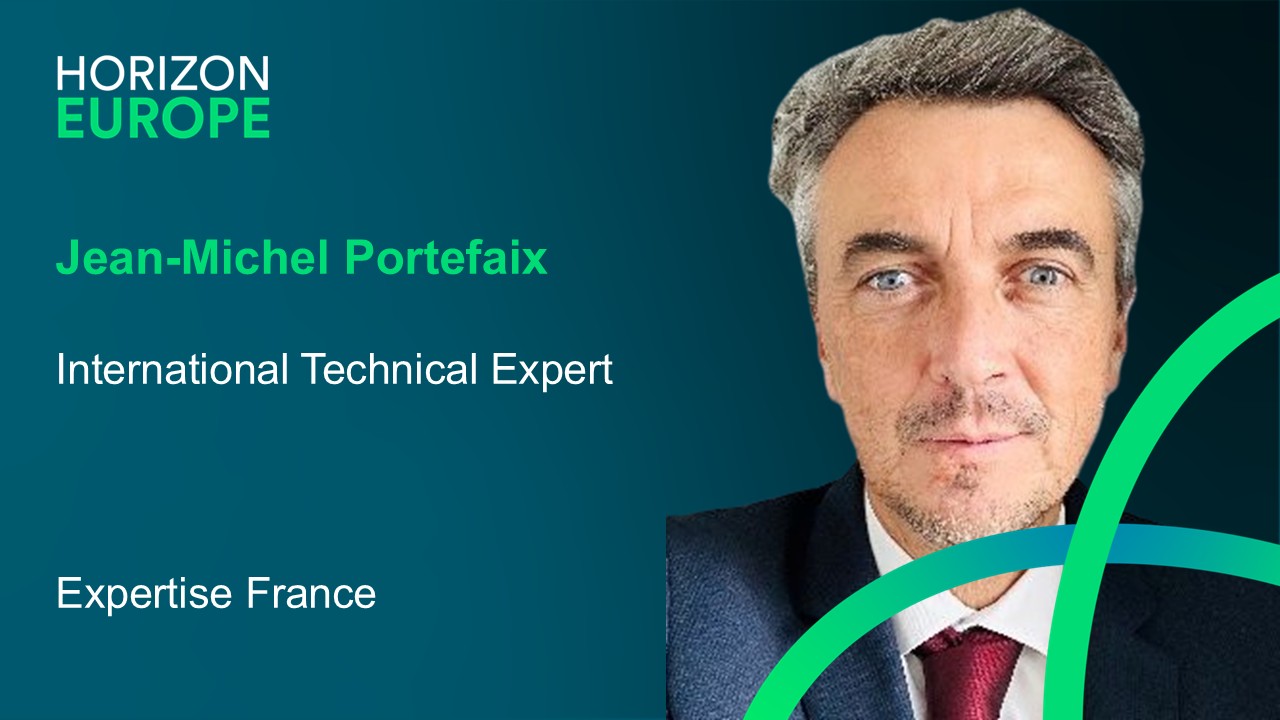
Please contact jean-michel.portefaix@expertisefrance.com for more information regarding identifying partners and exploring Franco-Irish opportunities in cybersecurity research and innovation. Find out more about Horizon Europe go to www.horizoneurope.ie