
Irish digital health company myPatientSpace is providing the technology platform which underpins the rollout of a highly innovative care model for elderly cancer patients suffering from several other long-term conditions and comorbidities. The company is part of the consortium behind the GERONTE (streamlined GERiatric and ONcological evaluation based on IC TEchnology for holistic patient-oriented healthcare management for older multimorbid patients) Horizon 2020 research and innovation funded project.
Coordinated by the Université de Bordeaux, with Professor Pierre Soubeyran of the Institut Bergonié as scientific coordinator, the project consortium involves ten partner organisations across France, Ireland, Belgium, the Netherlands, Norway, Italy and Switzerland. The development and testing of the GERONTE model will replace a disease-centred approach with a patient-centred approach, with the twin aims of improving quality of life and preserving independence for older patients while making health systems more efficient.
A patient-centred care model
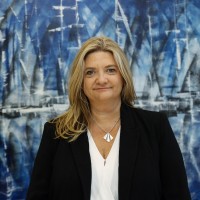
Una Kearns, founder and CEO of myPatientSpace.
According to myPatientSpace CEO and founder Una Kearns, the transformational GERONTE model sees a switch from patients being treated separately by different health professionals for each of their conditions, to a single coordinated pathway. A geriatrician assesses the patient’s overall capacity, covering mobility, nutrition, cognition, other conditions and medications, and this coordinated assessment informs the cancer treatment decision.
Patients report their symptoms and issues daily from home through the myPatientSpace app and receive personalised information and guidance on managing those symptoms from a personalised digital library, helping them to self-manage and stay independent. This continuous monitoring is designed to anticipate complications, allow earlier intervention and reduce emergency hospital admissions. An advanced practice nurse acts as the patient’s main point of contact and case manager, coordinating the oncologists, geriatricians, GPs and other specialists who regularly review the patient’s situation together. Decisions are shared with the patient and shaped by what matters most to them, whether that is cure, regaining independence or relieving symptoms.
Very importantly, all of the health professionals involved have full visibility of the patient and their needs through a shared dashboard built on the myPatientSpace platform which combines oncology data, geriatric assessment, comorbidities and the patient’s own stated priorities. The dashboard is completed and managed by the nurse, who can manage multiple patients. This model is now being evaluated in FRONE, a clinical trial across 10 healthcare sites in France involving around 400 patients over 70 with breast, lung, colorectal or prostate cancer and at least one other major chronic condition.
“The project is due to conclude in March 2027,” says Kearns. “It is hoped that it will demonstrate improved quality of life at six months for the patients involved, along with greater independence, fewer hospitalisations and lower overall costs of care.” The introduction that led to myPatientSpace joining the €5.9 million project came about almost by accident, though the selection that followed did not. Kearns explains that the company only came on board in 2024, three years into the project which had originally been funded in 2021.
Competitive process
“We were exhibiting at a conference where we met the late Professor Anthony Staines from DCU,” she explains. “DCU is a partner in GERONTE, and he told us about the project. We understood it was at risk because the original technology partner was unable to continue. He asked if he could tell the consortium leaders about us and our capabilities.”
That led to myPatientSpace joining the consortium following a competitive process involving two other French companies. Kearns attributes that success to her company’s established track record in the space. “We already had a proven platform. We’ve been building the company over past eight years. We provide a platform that enables remote patient care at scale. It’s a multi-disease, device agnostic platform. Because it is configured rather than custom-built, a new care pathway can be stood up quickly, which is what the consortium needed. Many of our projects are award-winning and widely published. For example, ResMed PEI uses our platform to deliver and manage their service for sleep apnoea patients across Ireland. Other examples include the very successful Donegal Community and Acute Respiratory Excellence (Care) virtual ward project for COPD patients also uses it.”
The patient platform is also used at Beaumont Hospital in Dublin and Our Lady of Lourdes Hospital in Drogheda. “We do a lot of work in the cancer space, and those hospitals use our platform to remotely manage their cancer patients and schedule their treatments.” Existing certification was decisive, she adds. “Being able to demonstrate ISO 13485, ISO 27001, CE marking and health-grade hosting on day one shortened the due diligence process considerably and was central to our selection.”
Rapid deployment
myPatientSpace was appointed Work Package 2 lead, responsible for the digital tools underpinning the GERONTE intervention. Once the selection process was completed the actual platform rollout and deployment moved quickly. “We joined the project in May 2024, we were piloting by September, and the trial intervention went live in December. It has since been rolled out across all 10 French trial sites, from leading cancer centres to smaller rural hospitals, in English and French.”
This deployment and rollout was by no means as straightforward as it sounds, Kearns notes. “Joining a project already in motion meant that a lot of the care model, data specification and trial protocol were fixed before we arrived, so we had less options to shape it. This was restrictive and there were things we could see which would improve the tools that we could not introduce, because the trial was fixed. That is the right call for a clinical trial, but it takes discipline when you are used to iterating with users. Another challenge was the bilingual delivery of the platform across 10 hospital sites.”
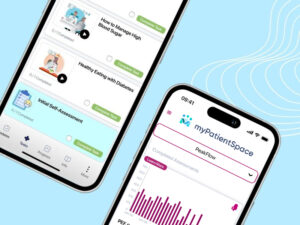
myPatientSpace mobile app supporting patients with personalised treatment plans.
Participation in the project has benefited myPatientSpace in a number of ways. “We’re working with some of the top clinical teams across Europe in this space. It’s great for us to be the platform behind a whole new model of care for geriatric cancer care and geriatric oncology treatment in Europe. This involves bringing in nurses to help coordinate geriatricians, oncologists and so on but also to bring in the voice of the patient so they are more engaged in their treatment and care.”
The myPatientSpace platform provides an information-rich dashboard that brings everything together in a 360 view, she explains. “It allows the clinical team to review what’s going on with the patient together in a multidisciplinary team (MDT) meeting and determine whether they are receiving the right treatment. The patient is connected at all times, and they are doing their symptom monitoring at home which gets reported to the team on an ongoing basis.”
There is a personal dimension too, Kearns adds. “Being able to develop products for a project whose aim is improving the quality of life of older people with cancer is a real privilege. It is why we started myPatientSpace in the first place.”
Enhanced reputation

GERONTE team including myPatientSpace, Bordeaux, Bergonie and DCU, in Lyon, France.
The project has also demonstrated the company’s capability. “We were able to scale and adapt our platform and roll it out systematically across 10 centres in France working with teams from across Europe. The project has given us credibility in the European market and with the EU and provided funding to deploy, configure and host our platform for the GERONTE intervention and all other project related work including exploitation and work package management.”
That enhanced reputation has led to the company receiving a number of invitations to participate in other consortia seeking Horizon Europe funding. “We need to do a lot of work to avail of those opportunities,” says Kearns. “We also need to come up with a market entry plan to exploit the commercial opportunities which are opening up for us. We have reached out to Enterprise Ireland France for support with that.”
Challenges
There were some challenges she believes other SMEs should be aware of. “The administrative load of a Horizon project is far greater than we expected, and it is not proportionate to the technical work. Reporting periods, deliverable documentation, review preparation, timesheets, cost claims, consortium governance and amendment processes consume a significant amount of senior time. We would advise any SME considering a Horizon project to budget for this explicitly, as a named role and a real cost line, rather than assuming it can be absorbed alongside delivery.”
Work package leadership compounds that, she notes. “Leading a work package is not something you can hand off. It draws on the same senior people who would otherwise be growing the business, winning customers, opening new markets and developing product. For a company of our size that is a genuine trade-off, and it is worth weighing before you commit rather than discovering it afterwards.”
Product companies should also understand what the funding actually pays for, she says. “A Horizon grant reimburses costs, not product. You are paid for people’s time and for the costs you incur, not for your software and not for a licence, and there is no margin in it.” Cash flow is another issue. “EU cost reimbursement operates on periodic claims, which requires a small company to fund the work in advance.” As an SME you need to plan for this in advance and manage the cash flow as the project progresses.
Horizon Europe National Support Network advice
The company was able to call on the National Contact Point for Health based at Enterprise Ireland for advice. “This was very valuable. That guidance helped us navigate obligations that were new to us as a first-time Horizon participant. I would encourage other SMEs entering a consortium mid-project to make early contact with Enterprise Ireland and the National Contact Point network.”
Looking ahead, myPatientSpace is part of a new consortium which is . “This is going to be run by our Italian partners this time with a lot of the same consortium members,” she says. “This will be taking a lot of what has been done already and looking at scaling out the model. We hope to bring Irish sites we already work with into the next phase of this journey.
“It’s been great for an Irish SME to be a work package leader on a large Horizon project,” she concludes. “We joined a consortium that was in difficulty, with a clinical trial waiting on a platform that was not yet in place. We were piloting within four months, and the intervention was live in December, and it now runs across 10 hospital sites in France. For a company of our size that is the most demanding validation we could have asked for, and it has sharpened how we deliver complex care pathways. It has taught us a lot about how European projects work, but it has also opened a window into Europe and given us real credibility in this space.”
This project has received funding from the European Union’s Horizon 2020 research and innovation programme under grant agreement No 945218.
Learn more about the GERONTE project here. For further information about Horizon Europe go to www.horizoneurope.ie