After years of debate over the future of EU research and innovation funding, the discussion around Framework Programme 10 (FP10) and the European Competitiveness Fund (ECF) has entered a new phase. The broad architecture is now largely settled. The real battles ahead concern issues around governance, budget and the relationship between research excellence and Europe’s competitiveness agenda.
The Commission’s proposal for the next programming period would see a stand-alone FP10, with a proposed budget of €175 billion, operating alongside a €234 billion European Competitiveness Fund. Together, the two instruments would account for more than €400 billion towards research, innovation, industrial deployment and strategic technologies.
Cyprus Presidency delivers a key milestone
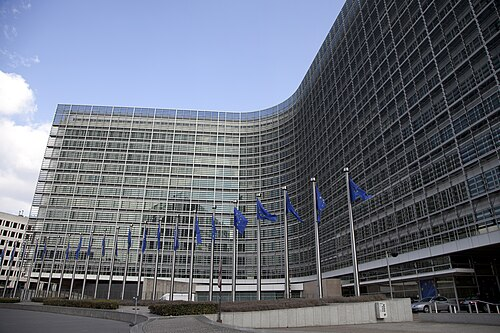
EU Commission HQ, the Berlaymont Building
The most important development of the first half of 2026 came under the Cypriot Presidency, which secured what is referred to as a partial general approach on FP10 and advanced negotiations on the broader Multiannual Financial Framework (MFF) which is essentially the EU’s Budget.
While the phrase may sound technical (as so much of EU matters appear!), a partial general approach is a significant political step. It means Member States have agreed a common Council position on the elements of the legislation that can be settled now, while leaving budgetary questions open until the wider MFF negotiations are concluded.
Because the FP10 and ECF budgets are tied to the 2028-2034 EU budget settlement, ministers are not yet in a position to agree final financial allocations.
The Council position emerging from Cyprus strengthens the role of Member States in programme governance and strategic priority setting, while preserving the Commission’s overall architecture.
The Cyprus Presidency has settled the broad shape of FP10. Attention is now turning to the thorny issues of governance and funding.
The architecture debate is essentially finished
One year ago, many research stakeholders, especially those of us in IGLO (Informal Group of RTD Liaison Offices), feared that Horizon Europe might lose its identity and be absorbed into a broader competitiveness fund. That debate is largely over.
A broad consensus has now emerged around three principles:
- FP10 should remain a stand-alone framework programme.
- The ECF should act as the EU’s principal scale-up and deployment instrument.
- Stronger pathways are needed between research, innovation and industrial application.
The discussion has therefore shifted towards creating practical mechanisms that connect the two instruments, hopefully without compromising the excellence-based foundations of European research funding. Proposals range from dedicated “Horizon Pathway Actions” to stronger use of partnerships and Joint Undertakings to bridge the gap between research outputs and commercial deployment.
Governance is emerging as the main battle

Christian Ehler, MEP
While there is a clear focus on budgets, issues around governance are rapidly becoming a significant ‘bugbear’ of the negotiations.
Several Member States want a stronger role in steering strategic priorities, exercising greater influence over partnerships and ensuring that national interests are reflected more directly in programme implementation.
The European Parliament, by contrast, continues to advocate more independent, expert-led governance structures. EU Parliament rapporteurs, such as Christian Ehler, have argued for strong links between FP10 and the ECF, while also protecting the autonomy of research funding and excellence-based decision-making.
Now that there is agreement that FP10 and ECF should be connected, yet independent, the question now is who should control the interface between them. Ehler, for example wants an expert-led approach with reduced power for the EU Commission.
Budget questions remain open
The financial dimension remains decidedly unresolved. The Commission continues to defend its proposal for a €175 billion FP10 budget, while many research and innovation stakeholders and the EU Parliament argue that Europe should move closer to the €200 billion level advocated in several high-profile reports and industry position papers.
At the same time, EU Council discussions have included lower budget scenarios, highlighting the reality that the final size of FP10 will ultimately depend on the outcome of the broader MFF negotiations and discussions on new EU ‘own resource’ income (funds that the EU Commission could raise independently of Member States’ allocations).
Zaharieva signals confidence
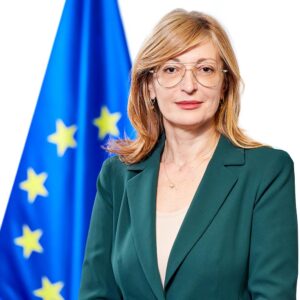
Ekaterina Zaharieva, European Commissioner
Research Commissioner Ekaterina Zaharieva has emphasised the need for close and effective alignment between Horizon Europe and the European Competitiveness Fund.
In recent engagements with stakeholders, she underlined that Europe cannot continue to raise ambitions on competitiveness, resilience and technology leadership without matching those ambitions with investment.
Commissioner Zaharieva has signalled that she believes the budget talks can finish on time. This is in line with the broader institutional objectives to agree the MFF package by the end of 2026 and complete the FP10 and ECF legislation in 2027, ahead of their planned January 2028 launch.
Irish Presidency takes the helm
Responsibility has now passed to Ireland for what is arguably the most politically sensitive phase of the process and unlike the Cypriot Presidency, which focused on building technical and legislative consensus, Ireland’s task will be one of political brokerage.
Over the coming months, the Irish Presidency will help steer negotiations on the overall MFF settlement, seek compromise on the Commission’s ‘own resources’ and spending ceilings, and manage the increasingly complex relationship between the Council, Parliament and Commission.
Ireland will work to maintain momentum towards a year-end political agreement while safeguarding the integrity of FP10 and ensuring that the growing focus on competitiveness strengthens rather than dilutes Europe’s research base.
Defence and security
One of the most notable shifts in the FP10 and ECF debate is the increasing prominence of defence, security and dual-use technologies. Unlike Horizon Europe, where civilian research remained the dominant focus, the proposed ECF contains a dedicated policy window for Resilience and Security, Defence Industry and Space, reflecting the broader EU drive towards technological sovereignty, defence preparedness and strategic autonomy. Policymakers are increasingly discussing mechanisms that support technologies with both civilian and defence applications, ranging from AI and quantum technologies to advanced materials, cybersecurity and space capabilities.
What’s next?
As the second half of 2026 begins, the shape of the future system is becoming clearer: FP10 looks set to remain Europe’s flagship research programme while the ECF will be its scale-up and industrial deployment engine. The major questions that remain are how much money will ultimately be available, who will control strategic priorities, and how the Irish Presidency can deliver the political agreement needed to keep the next generation of European programmes on track for 2028.
Your Brussels base
While the political situation in Brussels and the wider world may be complex, one simple fact is that Ireland needs to be more connected to the heart of the EU. Enterprise Ireland provides a base for Irish companies, researchers and Research Performing Organisations to connect with other partners in order to collaborate and to win. In a time of ever-increasing use of AI in Horizon research proposals, the depth, authenticity and overall strength of a proposal developed by people who collaborated face to face is something that evaluators will increasing look for and not something that AI can replicate. Our facilities are here for you, and I am always happy to provide briefings, make introductions and do anything I can to help demystify Brussels.
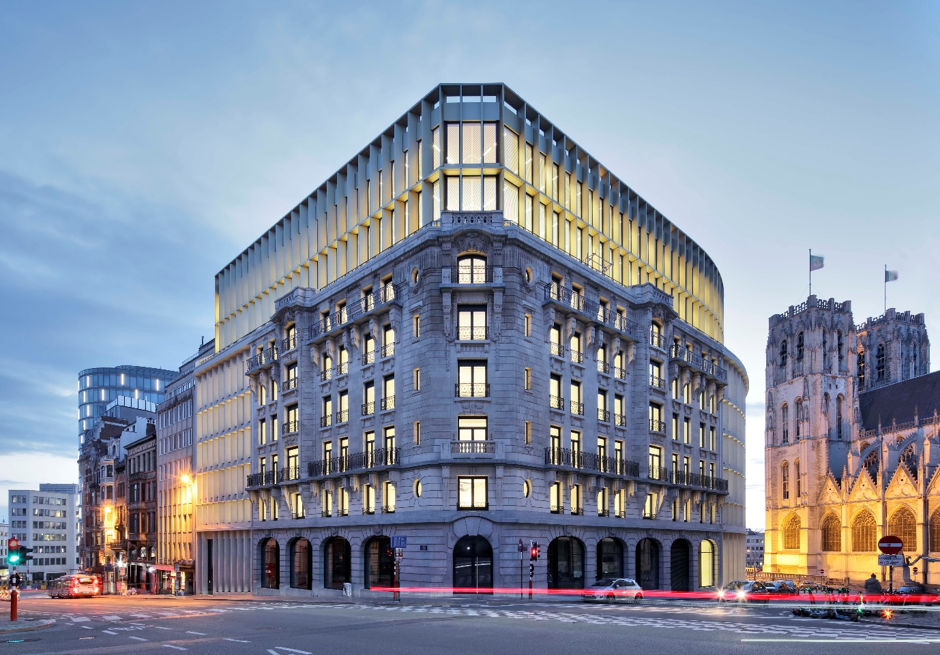
Enterprise Ireland, Chancelier Building, Place Sainte-Gudule 14, 1000 Bruxelles
For further information contact kevin.flynn@enterprise-ireland.com and to find out more about Horizon Europe go to www.horizoneurope.ie